
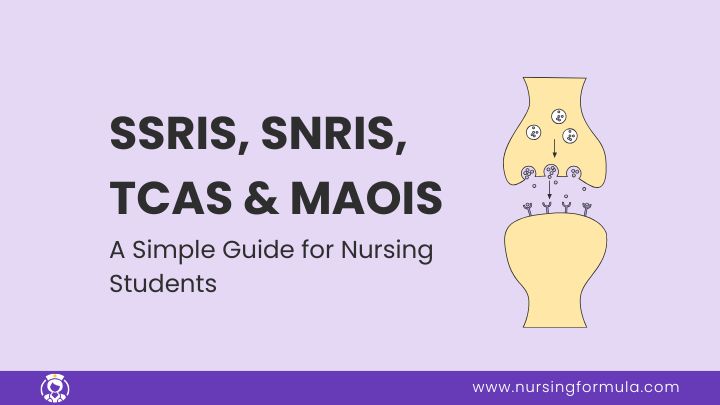
SSRIs SNRIs TCAs MAOIs can feel like a whole new language at first, but you don’t have to decode them alone.
If you want to test yourself as you learn, you can try the Psych Medications Quiz or review the basics with the Basic Pharmacology Quiz.
These four antidepressant classes show up everywhere—in lectures, on the NCLEX, and in real patient care—so understanding how they work makes your clinical decision-making so much clearer.
In this guide, we’ll break each class into small, simple parts: what they do, how fast they work, what side effects to watch for, and why certain medications need extra safety steps.
You’ll learn when each class is used, how to recognize red-flag symptoms, and how to compare them in real-world situations.
And don’t worry—we’ll keep the examples friendly and the explanations simple.
Think of this as your step-by-step roadmap to mastering antidepressants with confidence.
Why Antidepressant Classes Matter in Nursing
Antidepressants play a major role in patient care, and understanding them helps you monitor symptoms, prevent complications, and make safer clinical decisions.
These medications also appear often in NCLEX pharmacology questions, so knowing how they work gives you a strong advantage when studying.
The Role of Neurotransmitters in Depression
At the heart of antidepressant therapy are three key neurotransmitters: serotonin, norepinephrine, and dopamine.
When these chemicals are out of balance, patients may experience depressed mood, low energy, anxiety, or difficulty concentrating.
Different antidepressant classes target these neurotransmitters in different ways.
That’s why understanding the “chemical story” behind each medication helps you connect the drug’s purpose to its effects.
If you want a quick refresher on how neurotransmitter-based drug classes are organized, the Drug Classification Quiz can help reinforce the basics.
How Antidepressants Improve Patient Outcomes
Antidepressants don’t work instantly. Many begin with a slow, steady shift in mood and energy levels:
- Onset differences: Some medications help with sleep or anxiety within days, but most mood benefits take weeks.
- Mood stabilization: As neurotransmitter levels rebalance, patients may feel more motivated, more hopeful, or more emotionally steady.
- Safety issues: Nurses must watch closely for early-treatment concerns like increased anxiety, suicidal thoughts, or activating side effects.
Because each class works differently, your monitoring responsibilities change depending on the medication.
If you want extra practice recognizing medication reactions, the Drug Side Effects and Interactions Quiz is a helpful next step.
Comparison Table: SSRIs vs SNRIs vs TCAs vs MAOIs
Here’s a simple comparison to help you see how the four classes of psych medication differ:
| Class | Main Neurotransmitter Target | Typical Onset | Key Safety Concern | Common Uses |
|---|---|---|---|---|
| SSRIs | ↑ Serotonin | 4–6 weeks | Serotonin syndrome | Depression, anxiety |
| SNRIs | ↑ Serotonin & Norepinephrine | 2–4 weeks | Increased blood pressure | Depression with pain |
| TCAs | Broad receptor effects | 2–4 weeks | Cardiac toxicity, sedation | Pain syndromes, migraines |
| MAOIs | Prevent monoamine breakdown | 2–6 weeks | Hypertensive crisis | Resistant depression |
This table gives you a quick snapshot of what makes each class unique and why nurses must pay attention to different safety concerns for each one.
SSRIs: Selective Serotonin Reuptake Inhibitors
SSRIs are the most commonly prescribed antidepressants, and for good reason—they’re effective, generally well-tolerated, and used across a wide range of mental health conditions.
As a nurse, understanding how SSRIs work helps you monitor patients safely and recognize early signs of complications like serotonin syndrome.
What Are SSRIs?
SSRIs (Selective Serotonin Reuptake Inhibitors) are medications that increase serotonin levels in the brain.
Serotonin is often called the “feel-good” neurotransmitter, and restoring its balance helps improve mood, energy, sleep, and anxiety symptoms.
SSRIs are often chosen as the first-line treatment for depression and anxiety disorders because of their safety profile and predictable effects.
SSRIs Mechanism of Action
SSRIs block the reuptake of serotonin in the synapse.
Think of it as allowing serotonin to stay active longer, so it has more time to improve mood and emotional regulation.
Memory Trick: “SSRIs = Serotonin Support.”
SSRIs Pharmacokinetics (Onset, Peak, Duration)
| Property | SSRIs |
|---|---|
| Onset of effects | 1–2 weeks |
| Full therapeutic effect | 4–6 weeks |
| Duration / Half-life | Varies by medication (fluoxetine has a long half-life) |
Patients may feel minor improvements early on, but true mood stabilization takes time. This is important to explain to prevent discouragement or early discontinuation.
Common SSRIs
- Fluoxetine (Prozac)
- Sertraline (Zoloft)
- Escitalopram (Lexapro)
- Paroxetine (Paxil)
- Citalopram (Celexa)
Indications For SSRIs
SSRIs are used for multiple psychiatric and non-psychiatric conditions:
- Major depressive disorder
- Generalized anxiety disorder
- OCD
- PTSD
- Panic disorder
- Social anxiety disorder
- PMDD
SSRIs Side Effects
SSRIs are generally well-tolerated, but patients may experience:
- Nausea or GI upset
- Headache
- Sexual dysfunction
- Insomnia or mild activation
- Weight changes
- Increased anxiety in the first week
If you want to practice identifying common medication reactions, the Drug Side Effects and Interactions Quiz is a great tool.
Serotonin Syndrome
Serotonin syndrome occurs when serotonin levels become dangerously high, often due to combining serotonergic medications.
Signs and Symptoms:
| Category | Symptoms |
|---|---|
| Neuromuscular | Tremors, clonus, muscle rigidity |
| Autonomic | Sweating, fever, tachycardia |
| Mental status | Agitation, confusion |
This reaction progresses quickly, so nurses must recognize it early.
If you want practice spotting life-threatening medication reactions, try the High-Risk Drug Safety Quiz.
SSRIs Nursing Considerations
- Monitor for increased suicidal thoughts, especially during the first few weeks.
- Teach patients to expect gradual improvement rather than immediate relief.
- Avoid combining SSRIs with MAOIs, triptans, St. John’s Wort, or other serotonergic agents.
- Encourage patients not to stop SSRIs suddenly due to withdrawal effects.
- Monitor weight, sleep patterns, and emotional changes.
- Explain that early-treatment anxiety or restlessness usually improves after the first week.
Memory Trick for SSRIs
“SSRIs = Slow Start, Serotonin Support, Safety First.”
SNRIs: Serotonin-Norepinephrine Reuptake Inhibitors
SNRIs help increase both serotonin and norepinephrine in the brain.
This dual action can improve mood, boost energy, and reduce chronic pain symptoms.
Because norepinephrine also affects blood pressure, nurses must watch for hypertension and other changes early in treatment.
What Are SNRIs?
SNRIs are antidepressants that raise two neurotransmitters at the same time: serotonin and norepinephrine.
This makes them helpful for patients with depression, anxiety, and pain conditions like neuropathy or fibromyalgia.
They are often chosen when a patient needs both mood support and pain relief in one medication.
SNRIs Mechanism of Action
SNRIs block the reuptake of serotonin and norepinephrine.
This leaves more of each chemical available in the synapse, which improves mood, focus, and energy levels.
Memory Trick: “SNRIs = NE ↑ → BP ↑.”
A quick reminder that norepinephrine rises—and blood pressure may rise too.
SNRIs Pharmacokinetics (Onset, Peak, Duration)
| Property | SNRIs |
|---|---|
| Onset of effects | 1–2 weeks |
| Full therapeutic effect | 4–8 weeks |
| Duration | Often extended-release formulations |
Patients may feel early changes in energy or sleep, while mood benefits continue to build over several weeks.
Common SNRIs
- Venlafaxine (Effexor)
- Duloxetine (Cymbalta)
- Desvenlafaxine (Pristiq)
Indications For SNRIs
SNRIs are commonly prescribed for:
- Depression
- Generalized anxiety
- Panic disorder
- Chronic pain
- Neuropathic pain
- Fibromyalgia
Their dual action makes them helpful when pain and mood symptoms occur together.
SNRIs Side Effects
Because SNRIs increase norepinephrine, blood pressure can rise. Nurses should monitor this closely.
Other side effects include:
- Headache
- Nausea
- Dizziness
- Insomnia
- Sweating
- Withdrawal symptoms if stopped suddenly
If you want to practice medication effects on the cardiovascular system, the Cardiac Drugs Quiz can help reinforce BP-related concepts.
SNRIs Nursing Considerations
- Check blood pressure regularly.
- Teach patients not to stop SNRIs abruptly.
- Watch for worsening anxiety at the start of treatment.
- Monitor for signs of serotonin syndrome.
- Do not crush extended-release capsules.
- Encourage slow position changes to avoid dizziness.
If you want extra practice recognizing emergencies related to hypertension or medication reactions, the Free Emergency Drug Quiz is a good resource.
Memory Trick For SNRIs
“SNRIs = Serotonin + NE + Rising BP.”
TCAs: Tricyclic Antidepressants
TCAs are older antidepressants, but they are still used today—especially for pain conditions and migraines.
They affect several receptors at once, which means they can be very effective but also come with important safety considerations.
Nurses must stay alert for cardiac effects, sedation, and overdose risks.
What Are TCAs?
TCAs (Tricyclic Antidepressants) are medications that work on multiple neurotransmitters at the same time.
Because of this broad action, they help with mood, sleep, and certain types of chronic pain.
They are not usually first-line antidepressants anymore, but they remain valuable in specific cases, especially when patients have pain disorders.
TCAs Mechanism of Action
TCAs block the reuptake of serotonin and norepinephrine.
They also block histamine and acetylcholine receptors, which explains many of their side effects.
Memory Trick: “TCAs = Cardiac, Coma, Convulsions.”
A quick way to remember their major overdose risks.
TCAs Pharmacokinetics (Onset, Peak, Duration)
| Property | TCAs |
|---|---|
| Onset of effects | 2–4 weeks |
| Peak effect | 4–6 weeks |
| Duration / Half-life | Long; varies by medication |
TCAs may help with sleep and pain earlier, but mood improvement still takes time.
Common TCAs
- Amitriptyline
- Nortriptyline
- Imipramine
- Clomipramine
TCAs Indications
TCAs are used for more than depression. They are common in:
- Neuropathic pain
- Migraine prevention
- Fibromyalgia
- Insomnia
- Nocturnal enuresis (imipramine in pediatrics)
If you want extra practice with pediatric medication safety, the Pediatric Drug Safety Quiz can help reinforce age-specific risks.
Side Effects of TCAs
Because TCAs affect multiple receptors, side effects can be significant:
- Dry mouth
- Constipation
- Blurred vision
- Urinary retention
- Sedation
- Orthostatic hypotension
- Weight gain
These anticholinergic effects are strong, so patients must be monitored closely.
TCA Toxicity Risks
TCA overdose is extremely dangerous and can be fatal. This is why TCAs are used cautiously in patients with suicidal thoughts.
Major toxicity signs include:
- Cardiac arrhythmias
- Severe hypotension
- Seizures
- Respiratory depression
- Coma
If you want more practice identifying serious medication reactions, try the High-Risk Drug Safety Quiz.
TCAs Nursing Considerations
- Avoid TCAs in patients with cardiac disease.
- Monitor ECG if doses are high or if the patient has risk factors.
- Use caution in older adults due to strong anticholinergic effects.
- Teach slow position changes to prevent dizziness.
- Watch for sedation—especially with nighttime dosing.
- Keep out of reach of patients with suicidal ideation.
- Educate patients that full benefits take several weeks.
Memory Trick For TCAs
“TCAs = Tired, Constipated, Arrhythmias.”
MAOIs: Monoamine Oxidase Inhibitors
MAOIs are powerful antidepressants, but they require strict dietary rules and careful monitoring.
When used correctly, they can help patients who have not improved with other treatments.
Because of the risk of severe interactions, nurses play a major role in keeping patients safe.
What Are MAOIs?
MAOIs (Monoamine Oxidase Inhibitors) are antidepressants that increase several neurotransmitters at once—mainly serotonin, norepinephrine, and dopamine.
They are usually prescribed when other antidepressants have not worked well.
MAOIs are effective, but their interactions make education and monitoring essential.
MAOIs Mechanism of Action
MAOIs block the enzyme monoamine oxidase, which normally breaks down serotonin, norepinephrine, and dopamine.
With the enzyme blocked, neurotransmitter levels rise, improving mood and energy.
Memory Trick: “MAOIs = Must Avoid Tyramine.”
A simple reminder of their biggest dietary restriction.
MAOIs Pharmacokinetics (Onset, Peak, Duration)
| Property | MAOIs |
|---|---|
| Onset of effects | 2–4 weeks |
| Full therapeutic effect | 4–6 weeks |
| Duration | Long-lasting enzyme effects |
Even after stopping the medication, enzyme activity may take weeks to return to normal.
Common MAOIs
- Phenelzine (Nardil)
- Tranylcypromine (Parnate)
- Isocarboxazid (Marplan)
- Selegiline patch (Emsam)
MAOIs Indications
MAOIs are used for:
- Atypical depression
- Treatment-resistant depression
- Some anxiety disorders
- Parkinson’s disease (selegiline)
They are not first-line medications, but they can be life-changing for patients who do not respond to SSRIs or SNRIs.
Side Effects Of MAOIs
Common MAOI side effects include:
- Orthostatic hypotension
- Dizziness
- Insomnia
- Weight changes
- Dry mouth
- Sexual dysfunction
More serious reactions occur when MAOIs mix with certain foods or medications.
Tyramine Crisis & Nursing Priorities
Tyramine is found in aged, fermented, or cured foods. When combined with MAOIs, it can cause a dangerous hypertensive crisis.
Warning signs include:
| Category | Symptoms |
|---|---|
| Neurologic | Severe headache, vision changes |
| Cardiovascular | Sudden hypertension, chest pain |
| Autonomic | Sweating, nausea, palpitations |
Patients must avoid foods like aged cheeses, cured meats, soy products, wine, and beer.
If you want extra practice recognizing hypertensive emergencies, the Free Emergency Drug Quiz is helpful.
MAOIs Nursing Considerations
- Review all foods to avoid with MAOIs.
- Teach patients to report headaches immediately.
- Monitor blood pressure closely.
- Avoid combining MAOIs with SSRIs, SNRIs, TCAs, or many OTC medications.
- Follow the 14-day washout rule when switching medications.
- Use extreme caution with all serotonergic drugs.
If you want practice with medication sequencing and transition safety, the Medication Reconciliation Quiz is a great resource.
Memory Trick
“MAOIs = Avoid aged foods—or BP explodes.”
Comparing SSRIs, SNRIs, TCAs, and MAOIs
Understanding how these four antidepressant classes differ helps you make safer decisions at the bedside.
It also makes NCLEX questions much easier, because many items ask you to compare side effects, interactions, and safety priorities.
SSRIs, SNRIs, TCAs, and MAOIs Comparison Table
This table gives you a quick, simple way to see how SSRIs, SNRIs, TCAs, and MAOIs work and what nurses need to watch for.
| Drug Class | Main Action | Primary Risks | Onset | When It’s Used |
|---|---|---|---|---|
| SSRIs | ↑ Serotonin | Serotonin syndrome, sexual side effects | 4–6 weeks | Depression, anxiety, OCD |
| SNRIs | ↑ Serotonin + ↑ NE | Hypertension, withdrawal | 2–4 weeks | Depression with pain |
| TCAs | Broad receptor effects | Cardiac toxicity, sedation | 2–4 weeks | Pain syndromes, migraines |
| MAOIs | Prevent monoamine breakdown | Hypertensive crisis with tyramine | 2–6 weeks | Resistant or atypical depression |
This side-by-side format makes it easier to see which medications require blood pressure checks, which have dangerous food interactions, and which can become toxic quickly.
Sample psychiatric medication Clinical Decision Scenarios
These short examples help you connect psychiatric medication knowledge to real situations you may see in clinical practice.
Psych Drugs Scenario 1:
A patient starts sertraline and reports feeling more anxious on day three.
What it means: Early anxiety is common. Reassure and continue monitoring unless symptoms escalate.
Psych Drugs Scenario 2:
A patient on venlafaxine has a rising blood pressure at each visit.
What to do: Assess for SNRI-induced hypertension and notify the provider.
Psych Drugs Scenario 3:
A patient takes amitriptyline and reports dizziness when standing.
What it means: TCAs can cause orthostatic hypotension. Teach slow position changes.
Psych Drugs Scenario 4:
A patient on phenelzine develops a sudden, severe headache after eating pepperoni pizza.
What it means: Possible tyramine-triggered hypertensive crisis. Act immediately.
Psych Drugs Scenario 5:
A provider wants to switch a patient from fluoxetine to a MAOI.
What to consider: A washout period is required to avoid serotonin syndrome.
If you want to test your knowledge on when to choose one antidepressant class over another, the Psych Medications Quiz is a great next step.
Memory Tricks for SSRIs, SNRIs, TCAs, and MAOIs
Mnemonics make it easier to remember how each antidepressant class works.
These simple tools help you recall mechanisms, safety concerns, and key nursing points during exams and real patient care.
If you want to practice more medication mnemonics, the Drug Mnemonics Quiz is a great resource.
SSRI Memory Trick
“SSRIs = Serotonin Support.”
A quick way to remember their main action and why they help stabilize mood.
SNRI Memory Trick
“SNRIs = NE ↑ → BP ↑.”
When norepinephrine rises, blood pressure may rise too. This reminds you to monitor BP closely.
TCA Memory Trick
“TCAs = Cardiac, Coma, Convulsions.”
This points to the major overdose risks and why TCAs must be used carefully.
MAOI Memory Trick
“MAOIs = Must Avoid Tyramine.”
Perfect for remembering their strict dietary restrictions and hypertensive crisis risk.
Psych Meds Memory Trick Table
| Drug Class | Memory Trick | What It Helps You Remember |
|---|---|---|
| SSRIs | “SSRIs = Serotonin Support.” | Increases serotonin; first-line for depression and anxiety. |
| SNRIs | “SNRIs = NE ↑ → BP ↑.” | Raises norepinephrine, which may raise blood pressure. |
| TCAs | “TCAs = Cardiac, Coma, Convulsions.” | Major overdose risks and toxicity concerns. |
| MAOIs | “MAOIs = Must Avoid Tyramine.” | Strict food restrictions to prevent hypertensive crisis. |
Sample NCLEX-Style Clinical Scenarios
These scenarios help you connect antidepressant knowledge to real nursing decisions.
Each one shows you what to assess, what to prioritize, and why it matters for patient safety.
Case 1 — SSRI: Increased Anxiety After Starting Treatment
A 24-year-old patient started sertraline 4 days ago for generalized anxiety disorder. Today they report feeling “restless, shaky, and unable to sleep.” VS are stable, and the patient denies suicidal thoughts but says, “I feel wired.”
What this means:
SSRIs can increase anxiety during the first week as serotonin levels shift.
This early activation is common and usually improves over time.
What the nurse should do:
- Assess for suicidal thoughts even if the patient denies them initially.
- Reassure the patient that early restlessness is expected.
- Encourage adherence—stopping early delays benefits.
- Teach nonpharmacologic anxiety-reduction strategies (deep breathing, structured sleep routine).
- Notify the provider only if symptoms worsen or safety concerns appear.
Why it matters:
Patients often stop SSRIs early because they feel worse before they feel better.
Case 2 — SNRI: Gradual Hypertension Increase
A 52-year-old patient on venlafaxine for depression reports new headaches and feels “more tense.” Their BP, previously normal, has risen from 118/76 to 144/92 over three weeks.
What this means:
SNRIs increase norepinephrine.
This can cause vasoconstriction and elevated blood pressure.
What the nurse should do:
- Re-check BP manually to confirm accuracy.
- Ask about caffeine, other medications, or supplements that may raise BP.
- Assess for symptoms of severe hypertension (blurred vision, chest pain).
- Teach the patient to monitor BP at home.
- Notify the provider about the increasing trend—dose adjustment may be needed.
Why it matters:
Overlooking small BP increases can lead to long-term complications or hypertensive episodes.
Case 3 — TCA: Suspected Overdose Emergency
A patient taking amitriptyline for neuropathic pain is brought to the ED by family. They found the patient confused, extremely drowsy, and with rapid, irregular heartbeat. Several pills are missing from the bottle.
What this means:
This presentation strongly suggests a TCA overdose, which is life-threatening.
TCAs can cause severe cardiac arrhythmias due to sodium channel blockade.
What the nurse should do:
- Initiate continuous cardiac monitoring.
- Assess airway and prepare for possible respiratory support.
- Obtain ECG immediately.
- Notify the provider and prepare for sodium bicarbonate administration if ordered.
- Gather medication history and time of ingestion.
Why it matters:
TCA overdose is one of the most dangerous psychiatric medication emergencies.
Case 4 — MAOI: Possible Hypertensive Crisis
A patient taking phenelzine arrives with a sudden, severe headache, neck stiffness, sweating, and BP of 198/112mmHg.
They report eating aged cheese and salami at a party.
What this means:
This is a tyramine reaction, leading to excessive norepinephrine release and a hypertensive crisis.
This can progress to stroke if not treated quickly.
What the nurse should do:
- Stay with the patient and reduce environmental stimulation.
- Re-check BP and assess for chest pain, confusion, or vision changes.
- Prepare for emergency antihypertensive medication.
- Review dietary restrictions once the patient is stable.
- Notify the provider immediately.
Why it matters:
MAOI dietary violations can turn into emergencies within minutes.
Case 5 — Switching Antidepressants: Washout Period Needed
A patient wants to switch from fluoxetine to a MAOI because they “didn’t feel better.” The provider orders the change but forgets to include a washout period. The patient is ready to fill the MAOI prescription today.
What this means:
Fluoxetine has a long half-life, and starting a MAOI too soon can cause serotonin syndrome.
What the nurse should do:
- Review when the last fluoxetine dose was taken.
- Teach the patient about the required washout period (typically 5 weeks for fluoxetine).
- Call the provider to clarify the plan.
- Assess for current serotonin syndrome symptoms (agitation, tremors, sweating).
- Document the communication and patient teaching.
Why it matters:
Correct sequencing of antidepressants prevents life-threatening interactions.
If you want more practice making decisions like these, try the NCLEX-Style Drug Quiz.
More Pharmacology Guides for Nursing Students
These antidepressant classes connect to many other areas of pharmacology.
If you want to keep building your knowledge and strengthen your foundation for clinical practice and NCLEX, these guides can help you move forward with confidence.
Here are a few resources that pair well with today’s topic:
- ACE Inhibitors vs ARBs — A simple comparison to help you understand blood pressure control and kidney protection.
- Beta Blockers Guide — Learn how these medications slow the heart, reduce workload, and manage anxiety symptoms.
- Insulin: Onset, Peak, Duration — A clear breakdown of how fast each insulin type works and when to monitor for hypoglycemia.
- Antibiotics Study Guide for Nurses: MOA, Classes & Red Flags — Understand how antibiotics work and the warning signs you should always watch for.
These guides help you make connections between drug classes, safety monitoring, and real clinical practice.
They also strengthen the pharmacology foundation you need for exams and bedside care.
What You’ve Learned
Here’s a simple recap to help you remember the key points about SSRIs, SNRIs, TCAs, and MAOIs:
- SSRIs increase serotonin and are first-line for depression and anxiety.
- SNRIs increase both serotonin and norepinephrine and may raise blood pressure.
- TCAs affect many receptors and have strong anticholinergic and cardiac effects.
- MAOIs require strict dietary restrictions to prevent hypertensive crisis.
- Each drug class has a different onset and safety profile.
- Serotonin syndrome can occur with serotonergic drug combinations.
- TCAs can be fatal in overdose due to cardiac toxicity.
- MAOIs need a washout period before switching medications.
- Side effects give clues about which neurotransmitters are affected.
- Memory tricks make each antidepressant class easier to remember.
- Clinical scenarios show how these medications present in real care settings.
Next Steps for Practice
If you want more practice applying what you learned, the Psych Medications Quiz is a great place to start.
If you want to build confidence identifying medication reactions and interactions, try the Drug Side Effects and Interactions Quiz or the Drug Administration Techniques Quiz.
If you want more practice with cardiovascular medications, the Beta Blockers Quiz and Cardiac Drugs Quiz can reinforce key safety points.
If you want to review insulin timing and safe administration, the NCLEX Insulin Mastery Quiz is a strong choice.
To refresh your understanding of infectious disease medications, the Antibiotics & Antimicrobials Quiz offers helpful practice with mechanisms, classes, and red flags.