
Opioids vs Non-Opioids is a topic every nursing student must understand to give safe and effective pain care.
If you want to test your skills as you learn, try the Pain Medications Quiz or review the Basic Pharmacology Quiz in the meantime.
Pain is one of the most common reasons patients seek care.
Knowing when to use opioids, when to choose non-opioids, and when to combine both helps you keep patients safe and comfortable.
In this guide, you’ll learn how these medications work, how quickly they act, what side effects to watch for, and how to recognize red-flag symptoms.
We’ll also walk through simple memory tricks and real clinical scenarios so you can apply what you learn right away.

Why Pain Medication Knowledge Matters in Nursing
Pain is one of the most common symptoms patients report, and choosing the right medication can change everything about their comfort and recovery.
Nurses play a central role in assessing pain, giving medications safely, and watching for early signs of complications.
Understanding how pain medications work helps you prevent mistakes and improve patient outcomes.
The Physiology of Pain
Pain comes in different forms, and understanding the basics helps you choose the right medication.
Acute vs chronic pain:
- Acute pain happens suddenly, usually from injury or surgery.
- Chronic pain lasts longer and can affect mood, sleep, and daily life.
Nociceptive vs neuropathic pain:
- Nociceptive pain comes from tissue damage, inflammation, or injury.
- Neuropathic pain comes from nerve damage and often feels like burning, tingling, or shooting sensations.
If you want a quick review of how pain types connect to medication classes, the Drug Classification Quiz is a helpful refresher.
The Nurse’s Role in Pain Control
Nurses guide the entire pain management process.
- Assessment: Ask where it hurts, how it hurts, and how it affects function.
- Reassessment: Pain must be checked again after medication is given.
- Monitoring: Watch for side effects, red-flag symptoms, and changes in vital signs.
Giving pain medication safely also requires skill.
If you want more practice with safe medication delivery steps, the Drug Administration Techniques Quiz can help.
Common Misconceptions About Pain Medications
Some beliefs about pain medications can lead to unsafe decisions if not corrected.
- “Opioids are always strongest.”
Opioids are powerful, but they are not the only option for severe pain. Non-opioids can be effective, especially when combined. - “Non-opioids can’t treat severe pain.”
Many forms of severe pain respond well to NSAIDs, acetaminophen, and adjuvant medications when used correctly.
Understanding these differences helps you make confident, safe choices at the bedside.
What Are Opioids?
Opioids are strong pain medications used when patients have moderate to severe pain.
They work quickly, but they also slow breathing and can cause sedation.
Because of this, nurses must watch patients closely and respond fast to early warning signs.
Opioid Definition
Opioids are medications that bind to opioid receptors in the brain and spinal cord.
This reduces the feeling of pain and can also create a calming effect.
They are powerful, effective, and essential in many situations, but they require careful monitoring.
Opioid Mechanism of Action (MOA)
Opioids attach to mu-opioid receptors.
This blocks pain messages from reaching the brain. It also slows breathing, triggers sedation, and affects the GI and urinary systems.
Memory Trick: “Opioids = Slow + Strong.”
Stronger pain relief, slower breathing.
Opioid Pharmacokinetics (Onset, Peak, Duration)
| Medication | Onset | Peak | Duration |
|---|---|---|---|
| Morphine | 5–10 min IV | 20 min | 3–4 hours |
| Hydromorphone | 5 min IV | 15–30 min | 2–3 hours |
| Fentanyl | 1–2 min IV | 5–10 min | 30–60 min |
| Oxycodone (PO) | 10–30 min | 1 hour | 3–6 hours |
These timing patterns help you decide when to reassess pain and when to expect side effects.
Opioid Indications
Opioids are used for:
- Acute pain
- Post-operative pain
- Cancer pain
- Palliative and end-of-life care
They remain essential when pain is severe or not relieved by non-opioid medications.
Side Effects of Opioids
Opioids can cause:
- Respiratory depression
- Sedation
- Constipation
- Urinary retention
- Hypotension
If you want to practice recognizing dangerous medication reactions, the High-Risk Drug Safety Quiz is helpful.
Red-Flag Symptoms
Call for immediate help if you see:
- Slow breathing (RR < 12/min)
- Blue or grey lips
- Severe drowsiness
- Unresponsiveness
These signs may indicate opioid toxicity.
Opioids Nursing Considerations
- Reassess pain after giving opioids.
- Check respiratory rate and depth.
- Keep naloxone nearby for emergencies.
- Use fall precautions for sedated patients.
- Watch for constipation and encourage prevention strategies.
- Start with the lowest effective dose.
Contraindications & Cautions for Opioids
Use opioids carefully in patients with:
- COPD
- Sleep apnea
- Older age
- Head injuries
- Low blood pressure
- Kidney or liver disease
These conditions increase the risk of breathing problems or excessive sedation.
What Are Non-Opioids?
Non-opioids are pain medications that work without slowing the brain or breathing.
They are often the first choice for mild to moderate pain and can be just as effective as opioids in many situations.
These medications also have fewer life-threatening risks, but they come with their own safety concerns.
Non-Opioid Definition
Non-opioids are medications used to relieve pain without binding to opioid receptors.
They treat inflammation, fever, muscle aches, headaches, and nerve-related pain.
They are often used alone or combined with opioids to improve pain relief.
Non-opioids Mechanism of Action
Different non-opioids work in different ways. Here is a simple breakdown.
NSAIDs MOA
NSAIDs block COX enzymes.
This reduces inflammation and decreases prostaglandin production. Less prostaglandin means less swelling and less pain.
Acetaminophen MOA
Acetaminophen works mainly in the brain.
It reduces pain and fever but does not reduce inflammation. It is gentler on the stomach than NSAIDs but harder on the liver.
Adjuvant Medications MOA
Some medications aren’t “pain drugs” but help target certain types of pain.
- Gabapentin and pregabalin: Calm nerve signals.
- Antidepressants (SNRIs, TCAs): Improve neuropathic pain by balancing neurotransmitters.
These are often used when pain comes from nerve damage.
Memory Trick: “Non-Opioids = Pain Relief Without Slowing You Down.”
Non-opioids Pharmacokinetics (Onset, Peak, Duration)
| Medication Class | Onset | Peak | Duration |
|---|---|---|---|
| NSAIDs | 30–60 min | 1–2 hours | 4–6 hours |
| Acetaminophen | 30 min | 1 hour | 4–6 hours |
| Gabapentin | 1–3 hours | Unknown | 6–8 hours |
This helps you know when to reassess pain after giving a dose.
Non-opioids Indications
Non-opioids are often used for:
- Mild to moderate pain
- Musculoskeletal pain
- Headaches
- Inflammatory pain
- Fever
- Neuropathic pain (with adjuvants)
They are also helpful as part of multimodal pain therapy.
Side Effects of Non-opioids
Each type of non-opioid has different risks.
- NSAIDs: GI bleeding, kidney damage, fluid retention
- Acetaminophen: Liver toxicity, especially with high doses
- Gabapentin: Dizziness, sedation, swelling in the legs
If you want more practice with medication effects on kidney function and electrolytes, the Fluid & Electrolyte Balance Quiz can help.
Non-opioids Nursing Considerations
- Check kidney function before giving NSAIDs.
- Check liver function before giving acetaminophen.
- Avoid NSAIDs in patients with GI ulcers, bleeding, or kidney disease.
- Teach patients not to exceed daily acetaminophen limits.
- Use caution with gabapentin due to sedation and fall risk.
Contraindications of Non-opioids
Non-opioids should be avoided or used cautiously in:
- Active GI bleeding
- Severe kidney disease (NSAIDs)
- Liver failure (acetaminophen)
- Older adults at high fall risk (gabapentinoids)
- Patients taking multiple medications with liver or kidney strain
Opioids vs Non-Opioids: Key Differences
Opioids and non-opioids are used every day in clinical practice, but they treat pain in very different ways.
Understanding these differences helps you choose the safest and most effective option for each patient.
It also helps you recognize when a patient needs closer monitoring—or when a medication change is necessary.
If you want to test your knowledge as you learn, the Pain Medications Quiz is a great place to start.
Opioids vs Non-Opioids: Comparison Table
This table gives you a simple, side-by-side breakdown of how these medications differ.
Use it to guide your clinical decisions and exam thinking.
| Category | Opioids | Non-Opioids |
|---|---|---|
| Mechanism | Bind to mu-opioid receptors to block pain signals. | Reduce inflammation, lower fever, or calm nerve transmission depending on the drug. |
| Onset | Fast onset, especially with IV opioids. | Slower onset, usually 30–60 minutes. |
| Pain Severity | Best for moderate to severe pain. | Best for mild to moderate pain; adjuvants help neuropathic pain. |
| Risks | Respiratory depression, sedation, hypotension, constipation, dependence. | GI bleed, kidney injury (NSAIDs), liver toxicity (acetaminophen), dizziness (gabapentin). |
| Monitoring | Respiratory rate, sedation level, pain reassessment, bowel function. | Kidney and liver labs, GI symptoms, fall risk with gabapentinoids. |
This comparison highlights which medications carry life-threatening risks and which require lab monitoring.
When to Choose Opioids
Opioids are appropriate when pain is severe or when rapid relief is needed.
They are especially useful when pain interferes with breathing, mobility, sleep, or recovery.
Use opioids when:
- The pain is moderate to severe.
- Post-surgical pain needs fast relief.
- Cancer pain causes major distress.
- Non-opioids did not work.
- Comfort care or palliative care is the priority.
Always pair opioid use with close monitoring, especially respiratory checks.
When to Choose Non-Opioids
Non-opioids are the first choice for many types of pain.
They are effective, safer, and help reduce the need for opioids.
Choose non-opioids when:
- Pain is mild to moderate.
- Inflammation is present (injury, arthritis, sprain).
- A long-term pain plan is needed.
- The patient is opioid-naïve.
- Respiratory depression risk is high.
- You want to avoid sedation.
They also play a major role in reducing opioid exposure.
When to Combine Them (Multimodal Pain Control)
Using opioid and non-opioid medications together can improve pain relief and reduce opioid doses. This approach is called multimodal pain management.
Combine them when:
- Post-operative pain needs steady control.
- One medication alone is not effective.
- You want to minimize opioid side effects.
- You are treating complex pain (e.g., musculoskeletal + neuropathic).
Examples:
- Morphine + acetaminophen
- NSAID + low-dose opioid
- Gabapentin + opioid for neuropathic pain
Multimodal therapy is considered best practice in many hospitals.
Common Myths and Realities
Myth: “Opioids are always the strongest option.”
Reality: Some non-opioids reduce inflammation better, which may control pain more effectively.
Myth: “Non-opioids can’t treat severe pain.”
Reality: When combined, non-opioids can significantly reduce opioid needs and improve outcomes.
Myth: “All opioids work the same.”
Reality: Different opioids have different onset times, peaks, and risks.
Myth: “Non-opioids are always safer.”
Reality: NSAIDs can cause GI bleeding and kidney damage if not monitored.
Understanding these truths helps nurses make safer decisions.
Opioids vs Non-Opioids: Key Differences
Opioids and non-opioids are used every day in clinical practice, but they treat pain in very different ways.
Understanding these differences helps you choose the safest and most effective option for each patient.
It also helps you recognize when a patient needs closer monitoring—or when a medication change is necessary.
If you want to test your knowledge as you learn, the Pain Medications Quiz is a great place to start.
Comparison Table
This table gives you a simple, side-by-side breakdown of how these medications differ. Use it to guide your clinical decisions and exam thinking.
| Category | Opioids | Non-Opioids |
|---|---|---|
| Mechanism | Bind to mu-opioid receptors to block pain signals. | Reduce inflammation, lower fever, or calm nerve transmission depending on the drug. |
| Onset | Fast onset, especially with IV opioids. | Slower onset, usually 30–60 minutes. |
| Pain Severity | Best for moderate to severe pain. | Best for mild to moderate pain; adjuvants help neuropathic pain. |
| Risks | Respiratory depression, sedation, hypotension, constipation, dependence. | GI bleed, kidney injury (NSAIDs), liver toxicity (acetaminophen), dizziness (gabapentin). |
| Monitoring | Respiratory rate, sedation level, pain reassessment, bowel function. | Kidney and liver labs, GI symptoms, fall risk with gabapentinoids. |
This comparison highlights which medications carry life-threatening risks and which require lab monitoring.
When to Choose Opioids
Opioids are appropriate when pain is severe or when rapid relief is needed. They are especially useful when pain interferes with breathing, mobility, sleep, or recovery.
Use opioids when:
- The pain is moderate to severe.
- Post-surgical pain needs fast relief.
- Cancer pain causes major distress.
- Non-opioids did not work.
- Comfort care or palliative care is the priority.
Always pair opioid use with close monitoring, especially respiratory checks.
When to Choose Non-Opioids
Non-opioids are the first choice for many types of pain. They are effective, safer, and help reduce the need for opioids.
Choose non-opioids when:
- Pain is mild to moderate.
- Inflammation is present (injury, arthritis, sprain).
- A long-term pain plan is needed.
- The patient is opioid-naïve.
- Respiratory depression risk is high.
- You want to avoid sedation.
They also play a major role in reducing opioid exposure.
When to Combine Them (Multimodal Pain Control)
Using opioid and non-opioid medications together can improve pain relief and reduce opioid doses. This approach is called multimodal pain management.
Combine them when:
- Post-operative pain needs steady control.
- One medication alone is not effective.
- You want to minimize opioid side effects.
- You are treating complex pain (e.g., musculoskeletal + neuropathic).
Examples:
- Morphine + acetaminophen
- NSAID + low-dose opioid
- Gabapentin + opioid for neuropathic pain
Multimodal therapy is considered best practice in many hospitals.
Common Myths and Realities
Myth: “Opioids are always the strongest option.”
Reality: Some non-opioids reduce inflammation better, which may control pain more effectively.
Myth: “Non-opioids can’t treat severe pain.”
Reality: When combined, non-opioids can significantly reduce opioid needs and improve outcomes.
Myth: “All opioids work the same.”
Reality: Different opioids have different onset times, peaks, and risks.
Myth: “Non-opioids are always safer.”
Reality: NSAIDs can cause GI bleeding and kidney damage if not monitored.
Understanding these truths helps nurses make safer decisions.
Pain Medication Safety in Special Populations: What Nurses Must Know
Some patients are more sensitive to pain medications than others.
Age, organ function, and pregnancy all change how opioids and non-opioids affect the body.
Knowing these differences helps you give safer care and prevent serious complications.
Pain Medication Safety in Older Adults
Older adults have a higher risk of medication side effects because their kidneys and liver may not work as efficiently.
They are also more sensitive to sedation.
Key points for practice:
- Start with lower doses.
- Watch for over-sedation and confusion.
- Monitor respiratory rate closely with opioids.
- Avoid NSAIDs if kidney function is poor.
- Use fall precautions—sedation increases fall risk.
Older adults often benefit from multimodal pain control to minimize opioid exposure.
Opioid and Non-Opioid Use in Pediatric Patients
Children process medications differently, and their doses depend on weight. They are sensitive to both underdosing and overdosing.
Nursing priorities:
- Always use weight-based dosing.
- Avoid codeine in children—it is unsafe.
- Watch for breathing changes with any opioid.
- Assess pain frequently; children may express pain differently.
If you want more practice with pediatric safety, the Pediatric Drug Safety Quiz is useful.
Safe Pain Management in Pregnancy & Postpartum
Pain medications affect both the parent and the baby. Safety depends on timing, dose, and the specific medication.
What nurses should know:
- NSAIDs should be avoided late in pregnancy.
- Acetaminophen is generally preferred for mild pain.
- Short-term opioid use may be needed after delivery, especially after C-sections.
- Monitor newborns for sedation if the parent is using opioids.
Always follow updated obstetric guidelines for medication safety.
If you want extra practice with OB medication safety, the OB Medications Quiz is a useful next step.
Pain Medication Considerations in Renal & Hepatic Impairment
Kidney and liver diseases change how medications are cleared from the body. This increases the risk of toxicity.
Renal Impairment: NSAID and Opioid Risks
- Avoid NSAIDs—they reduce kidney blood flow.
- Use opioids carefully; some accumulate in renal failure.
- Monitor urine output and creatinine.
Hepatic Impairment: Acetaminophen Limits and Monitoring
- Avoid high doses of acetaminophen.
- Use opioids with caution—they are metabolized in the liver.
- Monitor liver enzymes and signs of confusion or jaundice.
Adjusting doses protects patients from dangerous buildup of medications.
Memory Tricks to Keep It Simple
Pain medications can feel overwhelming at first, but a few simple memory tricks make everything easier to remember.
If you want more practice using mnemonics, the Drug Mnemonics Quiz is a great place to start.
Memory Trick Table
| Class | Memory Trick | Meaning |
|---|---|---|
| Opioids | “Slow + Strong” | Slows breathing. Strong pain control. |
| NSAIDs | “Kidneys + Stomach” | Main risks: kidney injury and GI bleed. |
| Acetaminophen | “A = ALT ↑” | High doses raise ALT → liver toxicity. |
| Gabapentin | “Nerves Need Help” | Used for neuropathic pain relief. |
These quick reminders help you connect each medication class to its biggest risks and uses.
Clinical Scenarios: Opioids vs Non-Opioids in Action
These scenarios show how nurses choose between opioids and non-opioids in real clinical situations.
Each case highlights what the medication is doing in the body, what the nurse should notice, and how to respond safely.
If you want more practice applying clinical judgment, the NCLEX-Style Drug Quiz is a great next step.
Case 1 — Post-Operative Pain: Using Balanced Pain Therapy
A patient is 6 hours post-op after abdominal surgery. Pain is now 8/10. They received morphine 20 minutes ago, but pain only decreased slightly to 7/10.
What this means:
Opioids help with severe pain, but inflammation is a major source of post-op discomfort. Opioids alone may not be enough.
Priority nursing action:
- Add a non-opioid such as acetaminophen or an NSAID (if no bleeding risk).
- Reassess pain after the new dose.
- Continue using multimodal pain control.
Why it matters:
Combining medications targets pain from different angles and reduces opioid needs.
Case 2 — Early Warning Signs of Respiratory Depression
A patient received IV hydromorphone 10 minutes ago. Respiratory rate drops from 16 to 10, and they become harder to wake.
What this means:
This is early opioid-induced respiratory depression. It can progress quickly.
Priority nursing action:
- Stay with the patient.
- Stimulate them and encourage deep breathing.
- Prepare naloxone immediately.
- Notify the provider.
- Continue to monitor breathing closely.
Why it matters:
Acting early prevents respiratory arrest.
Case 3 — NSAID Use in a Patient With Kidney Risk
A patient with hypertension and chronic kidney disease takes daily ibuprofen for back pain. Today, their creatinine is higher than normal.
What this means:
NSAIDs reduce blood flow to the kidneys. Patients with kidney disease are especially vulnerable.
Priority nursing action:
- Hold NSAIDs.
- Encourage hydration if appropriate.
- Notify the provider about the rising creatinine.
- Suggest switching to acetaminophen if safe.
Why it matters:
NSAIDs can cause sudden kidney injury in high-risk patients.
Case 4 — Acetaminophen Overdose in a Patient With Chronic Pain
A patient reports taking 6,000 mg of acetaminophen in the past 24 hours. They now feel nauseated and lightheaded.
What this means:
This is an overdose level. The liver is at risk.
Priority nursing action:
- Assess for RUQ pain, vomiting, and jaundice.
- Notify the provider immediately.
- Prepare for labs and possible N-acetylcysteine treatment.
Why it matters:
Acetaminophen overdose can lead to acute liver failure without rapid intervention.
Case 5 — Neuropathic Pain: Matching the Medication to the Pain Type
A patient reports burning, sharp leg pain that did not improve with oxycodone.
What this means:
The pain is neuropathic. Opioids are not effective for nerve pain.
Priority nursing action:
- Add an adjuvant such as gabapentin or duloxetine.
- Reassess pain response.
- Educate the patient about neuropathic pain treatment.
Why it matters:
Choosing the right medication based on pain type improves results and reduces opioid exposure.
More Pharmacology Study Guides for Nursing Students
Pain medications connect to many other drug classes you’ll see in clinical practice and on the NCLEX.
These guides help you build a stronger understanding of how different medications work, how fast they act, and what you should monitor at the bedside.
You can explore topics like:
- ACE Inhibitors vs ARBs — How these BP medications differ and when to choose each one.
- Beta Blockers Guide — Why these drugs slow the heart and how they affect blood pressure.
- Insulin Onset, Peak, Duration — Timing patterns that guide safe insulin administration.
- Antibiotics Nursing Study Guide — Key mechanisms, red flags, and nursing checks.
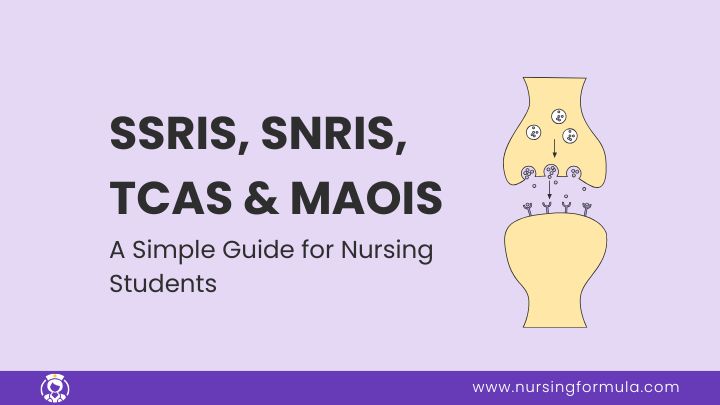
- SSRIs, SNRIs, TCAs & MAOIs: A Simple Guide for Nursing Students — A clear breakdown of antidepressants and their clinical differences.
These resources help you connect pharmacology concepts across different systems and improve your overall confidence with medication safety.
What You’ve Learned
Here’s a simple recap to help you remember the key points:
- Opioids work fast and relieve severe pain but slow breathing and require close monitoring.
- Non-opioids treat mild to moderate pain and inflammation with fewer respiratory risks.
- NSAIDs can harm the kidneys and irritate the stomach.
- Acetaminophen can damage the liver when doses are too high.
- Matching the medication to the pain type improves outcomes.
- Multimodal pain control often gives better relief with fewer opioid side effects.
- Special populations—older adults, children, pregnant individuals, and those with organ impairment—need special caution.
- Memory tricks make drug classes easier to remember during exams.
- Clinical scenarios help you practice safe decision-making.
Next Steps for Practice
If you want to strengthen what you learned, these quizzes can help:
- Pain Medications Quiz
- Drug Side Effects and Interactions Quiz
- Basic Pharmacology Quiz
- High-Risk Drug Safety Quiz
- NCLEX-Style Drug Quiz
- Beta Blockers Quiz
- Cardiac Drugs Quiz
- Antibiotics & Antimicrobials Quiz
These quizzes reinforce medication safety, clinical judgment, and pharmacology fundamentals.